Schedule a call!
Performance review season surfaces a consistent challenge for HR teams across the United States: self-evaluations that rely on vague adjectives, avoid difficult questions, and reveal little about how an employee actually behaves under pressure. Without structured guidance, even strong employees struggle to articulate their workplace values effectively. That is why having a clear set of integrity self-assessment examples for performance reviews is one of the most practical tools an HR professional can put in front of their teams.
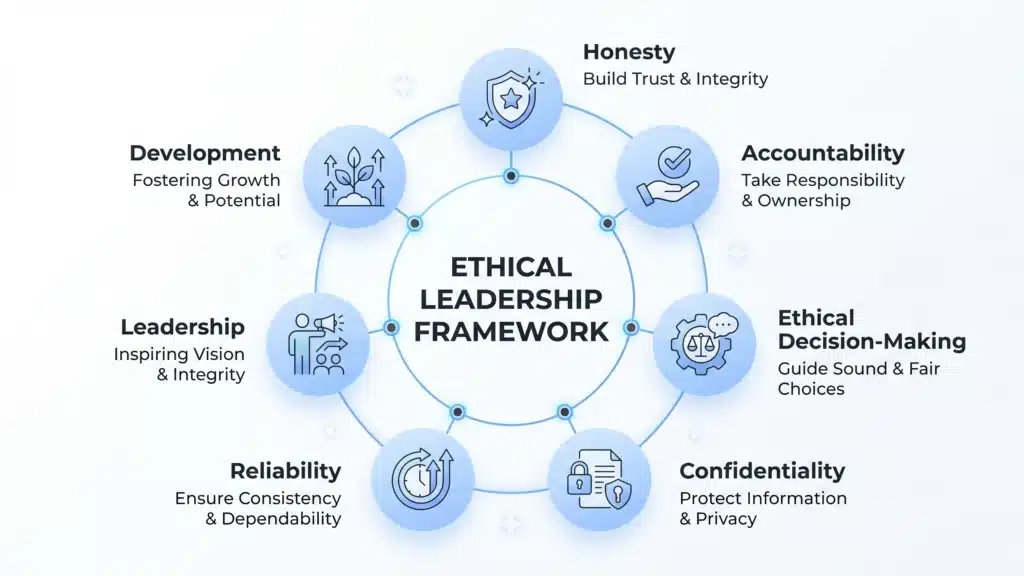
This guide delivers seven ready-to-use integrity self-assessment examples for performance reviews, covering honesty, accountability, ethical decision-making, confidentiality, reliability, leadership, and professional growth. Each section includes example statements, sample self-appraisal comments for integrity, and practical writing guidance based on the STAR method. Whether you are preparing employees for annual reviews, evaluating candidates in the screening process, or building a stronger performance culture, these examples are ready to use today.
What Is an Integrity Self Assessment?
An integrity self assessment is a structured reflection exercise that evaluates an employee’s honesty, ethical behavior, workplace accountability, and trustworthiness. These dimensions are foundational to effective performance reviews and hiring decisions at organizations of all sizes.
Integrity self-assessment tools are used at the institutional level in both the public and private sectors. NATO’s Integrity Self-Assessment Questionnaire and the UNDP’s Integrity Self-Assessment Tool both serve as formal diagnostic frameworks for evaluating integrity risks, governance standards, and ethical conduct — demonstrating that structured self-assessment is a proven and scalable methodology.
In a business context, an employee self-evaluation for integrity prompts individuals to reflect on real situations involving honesty, ethical judgment, and professional accountability. A strong response might describe how a team member flagged a billing error before it escalated, or how they navigated a conflict of interest transparently and on the record.
According to SHRM performance review best practices, structured self-evaluation processes that include behavioral evidence — not just ratings — consistently produce more actionable and legally defensible outcomes for HR teams.
When done correctly, these assessments help HR professionals distinguish employees who take genuine ownership of their conduct from those who offer surface-level answers. They reveal patterns in professional behavior, support promotion decisions, and reinforce the organizational values that drive long-term retention.
Why Integrity Self-Assessment Examples Matter in the Workplace
Integrity is a measurable, performance-linked factor — not a vague cultural aspiration. Gallup workplace trust research consistently finds that trust and accountability are among the strongest predictors of employee engagement and team performance in US organizations.
The business case is supported by data. When HR integrates structured integrity self-assessment examples into performance review cycles and hiring processes, organizations report measurable improvements across key workforce metrics:
| Benefit | Research-Backed Impact |
| Employee turnover reduction | 29% decrease in high-integrity teams |
| Workplace trust | 3x higher with consistent transparency practices |
| Compliance and risk management | 2x fewer compliance breaches reported |
| Positive work environment alignment | 90% improvement in team culture outcomes |
(Statistics from original article — primary source verification recommended before publishing)
Beyond the numbers, integrity shapes how teams function day to day. When HR integrates structured integrity measurement into performance review cycles, the result is a workplace where ethical behavior is the expectation, not the exception — and where 360-degree feedback integrity reviews reflect a culture that employees want to stay in.

7 Integrity Self-Assessment Examples for Performance Reviews
The following integrity self-assessment examples for performance reviews cover seven dimensions that HR professionals rely on in annual reviews, mid-year evaluations, and promotion assessments. Each section includes ready-to-use example statements and sample self-appraisal comments for integrity that employees can adapt directly.
1. Honesty and Transparent Communication
Honesty is the most foundational dimension in any integrity self assessment. Strong examples in this category demonstrate a consistent commitment to sharing accurate information — especially when the news is difficult or the stakes are high. These self assessment examples showing honesty at work are among the most valued by US hiring managers and performance reviewers.
Example Statement:
- Transparent Communication: I openly share project updates and changes with my team as they develop, including decisions that are difficult to communicate. My goal is that no one is caught off guard by information I already have.
- Truthful Reporting: When I identified a discrepancy in a client billing process, I escalated it immediately rather than waiting for it to surface during an audit. This allowed the team to take corrective action and preserved the client relationship.
- Navigating Ethical Dilemmas: When a client request conflicted with company policy, I prioritized our established guidelines, explained my reasoning clearly to all parties, and documented the outcome for the record.
A self-appraisal comment for integrity at this level signals ownership, builds team trust, and contributes to a workplace culture where transparency is practiced — not just stated in a mission document.

2. Accountability and Admitting Mistakes
Accountability self-assessment examples that acknowledge mistakes and describe corrective action provide HR with verifiable evidence of professional maturity. According to research highlighted by Gallup, teams where members openly admit errors and follow through on corrections consistently report higher performance and lower voluntary turnover.
Example Statement:
- Admitting Errors: I identified an error in the quarterly reporting process, immediately notified my manager, documented the root cause, and outlined specific steps to prevent recurrence.
- Learning from Mistakes: I shared the lessons from that situation with my team at our next meeting. It improved our collective attention to detail and led to a stronger review process going forward.
An annual review self-assessment example that frames mistakes as learning opportunities reinforces a culture of continuous improvement — and makes it easier for HR to distinguish growth-oriented employees from those who deflect accountability.
3. Ethical Decision-Making
True ethical decision-making self-assessment examples go beyond rule-following. They describe how an employee navigates ambiguous or competing priorities — and why they chose the path they did. In performance reviews, this dimension is particularly valuable for identifying employees who are ready for increased responsibility.
Example Statement:
- Facing Dilemmas: When a conflict of interest arose during a project assignment, I paused the process, consulted our corporate conduct guidelines, and sought input from a trusted advisor before proceeding.
- Choosing Fairness: I recommended a collaborative resolution and documented my decision-making process to ensure full transparency for any stakeholders reviewing the outcome.
This type of self-appraisal comment demonstrates STAR method thinking — structured, credible, and straightforward for HR reviewers to evaluate against consistent criteria. It signals that ethical judgment is built into how this employee works, not reserved for high-visibility situations.
4. Confidentiality and Data Responsibility
Protecting sensitive information is a non-negotiable dimension of workplace integrity, particularly in US organizations subject to federal and state privacy regulations. Employees who provide a clear confidentiality self-assessment example for HR demonstrate an understanding that data protection is a behavioral standard, not a policy review item.
EEOC guidelines on pre-employment screening and related federal standards reinforce that confidentiality obligations apply at every stage of the employee lifecycle — from candidate screening through performance evaluation.
Example Statement:
- Maintaining Confidentiality: I handle all sensitive employee and company data in strict accordance with our corporate policies and applicable federal and state regulations, without exception.
- Protecting Information: During a recent data policy update, I coordinated secure document transfers, verified that role-based access controls were properly applied, and confirmed that no unauthorized sharing occurred at any stage of the process.
Language like this reinforces the value of pre-employment integrity screening and gives HR concrete, verifiable evidence that confidentiality is part of how this employee operates day to day.
5. Reliability and Trustworthiness
Reliable employees reduce operational risk and build team confidence. Understanding how integrity screening reduces workers’ compensation claims and other risk factors begins with identifying employees who reliably follow protocols and honor commitments. Read more in our article on risky hires.
Example Statement:
- Consistent Delivery: I consistently meet project milestones and communicate proactively when timelines or circumstances change. My team knows they can count on me to deliver or escalate early — never after the fact.
- Trusted Colleague: Colleagues regularly seek my input on decisions and rely on my follow-through. I take that trust seriously and ensure my guidance is grounded in honest assessment, not convenience.
This type of integrity example for an annual review strengthens team cohesion and gives HR a verifiable, behavioral picture of how this individual functions as a professional resource.
6. Leadership Integrity
For managers and senior employees, leadership integrity self-assessment examples should reflect how they model values for their teams — not only how they behave individually. Psychological safety in performance reviews depends on leaders who demonstrate integrity consistently, not selectively.
Example Statement:
- Modeling Values: I consistently reinforce company values in team meetings and one-on-one conversations, treating them as behavioral expectations rather than aspirational statements reviewed once a year.
- Building Psychological Safety: I create space for every team member to contribute ideas, raise concerns, and respectfully challenge decisions. I model the behavior I expect and hold myself to the same standards I hold others.
A leadership integrity self assessment like this demonstrates the direct connection between individual ethical conduct and organizational culture — exactly the evidence HR needs when evaluating candidates for promotion or expanded leadership responsibility.
7. Growth and Development Focus
Growth-focused integrity statements demonstrate that an employee can identify their own blind spots and take deliberate, measurable action — a key signal of self-awareness and long-term professional reliability. This dimension is especially valuable in performance reviews that inform development planning.
Example Statement:
- Acknowledging the Challenge: I have at times found it difficult to navigate conflict within my team. Rather than allowing that pattern to continue, I have actively sought peer feedback and been transparent with my manager about the steps I am taking to improve.
- Commitment to Improvement: I have set a specific goal to strengthen my conflict resolution skills through targeted training, and I track progress against that goal each quarter to ensure I am moving forward.
This type of response demonstrates accountability, leadership potential, and a growth mindset — qualities that compound over time and signal strong long-term retention potential to HR.
How to Write Your Own Integrity Self Assessment for a Performance Review
You can draw on established frameworks to build effective self-assessment categories. The UNDP’s Integrity Self-Assessment Tool organizes integrity into clear areas — anti-corruption policies, whistleblowing protections, labor rights, and designated accountability roles — that translate directly into performance review categories for HR professionals.
Four practices that improve every integrity self assessment for a performance review:
- Use the STAR Method. Structure every example as Situation, Task, Action, Result. Define the context, describe your specific responsibility, explain the concrete steps you took, and close with a measurable or observable outcome. STAR method self-assessment examples are more credible and easier for HR reviewers to evaluate consistently.
- Document throughout the year. Strong self-assessments are built from evidence collected over time — not reconstructed from memory the week before the review. Encourage employees to log key decisions, outcomes, and feedback as they occur, in whatever format works for them.
- Balance honesty with constructive framing. Acknowledging mistakes is an asset in a performance review when paired with corrective action or clear lessons learned. Confidence combined with candor signals growth — which is exactly what HR wants to see in a self-evaluation.
- Align with your organization’s values and compliance requirements. Tailor integrity examples to reflect your company’s specific standards. If data protection is a priority, emphasize confidentiality practices. If cross-functional collaboration is central, highlight moments of inclusive and transparent decision-making.
Common Pitfalls and Biases to Avoid
Research suggests that approximately 29% of US employees undersell their performance in self-assessments, while only about 13% overstate it. The most common errors are omission and vagueness — not inflation. (Needs verification — primary source citation required before publishing)
- Generic claims without evidence: ‘I am a reliable team member’ is a claim. ‘I delivered the compliance audit on schedule despite a compressed timeline by coordinating across three departments’ is evidence. HR reviewers consistently value the latter.
- Missing growth areas: Employees who list only strengths signal either low self-awareness or reluctance to engage candidly. Both are worth addressing directly in the review conversation.
- Inconsistency with other feedback: When a self-evaluation diverges sharply from peer or manager observations, that gap is itself a useful data point for the HR professional conducting the review.
- Overusing adjectives instead of examples: ‘I am honest and dependable’ is not a self-appraisal comment for integrity. A STAR-structured example of a real situation is.
Customize Self-Assessment Examples by Use Case
Integrity self-assessment examples for performance reviews serve different purposes at different stages of the employee lifecycle. Tailoring the focus of each example to the specific context improves relevance for both the employee completing the assessment and the HR professional evaluating it.
| Use Case | Focus Dimensions | What HR Is Looking For |
| Pre-Employment Screening | Honesty under adversity, confidentiality practices, accountability | Early-stage risk flags; consistency between stated values and described behavior |
| Annual Performance Review | Reliability, ethical decision-making, follow-through on commitments | Behavioral evidence of growth from prior review cycle; alignment with team and company values |
| Mid-Year Check-In | Development focus, transparency in communication | Progress against development goals; willingness to address gaps proactively |
| Promotion Evaluation | Leadership integrity, mentorship, psychological safety | Evidence that the employee models values for others, not just for themselves |

Frequently Asked Questions About Integrity Self Assessments
What are good integrity examples for a self assessment?
Good integrity examples for a self-assessment describe a real situation, your specific role, the concrete action you took, and the measurable outcome. They cover dimensions such as honesty in reporting, accountability when mistakes occur, ethical decision-making under pressure, confidentiality in handling sensitive data, and reliability in delivering on commitments. Use the STAR method to structure each example so it is specific, verifiable, and easy for HR to evaluate.
How honest should you be in a performance review self assessment?
Be factual, specific, and grounded in real examples that can be verified by colleagues or managers. Acknowledge both strengths and areas for development. Honesty paired with evidence builds more trust with HR than polished generalities — and organizations consistently value transparency and corrective action over the appearance of perfection.
How do you show integrity in a performance review?
Show integrity in a performance review by describing specific situations where you acted honestly, held yourself accountable, protected confidential information, or made an ethical decision under pressure. Use the STAR method to structure your examples so the evidence is clear. Pair each strength with a named growth area and a concrete improvement step to demonstrate self-awareness.
How do you balance strengths and areas for growth in a self assessment?
For every strength you describe, name one area where you are actively working to improve — and provide a specific example of the steps you are taking. This demonstrates self-awareness without undermining your record of achievement. HR reviewers consistently rate self-assessments that include genuine growth reflection as more credible and more useful than those that list only accomplishments.
What is the difference between a self-assessment and a self-evaluation?
In most US HR contexts, the terms are used interchangeably. Both refer to a structured written reflection an employee completes as part of a performance review cycle. Some organizations use ‘self-evaluation’ for ratings-based forms and ‘self-assessment’ for narrative or competency-based responses, but there is no universal standard. The integrity self-assessment examples in this guide apply to either format.
Build a Stronger Performance Review Process with IntegrityFirst Tests
Organizations that embed pre-employment integrity assessments into their hiring and review processes often see significant improvements in employee retention within the first year. IntegrityFirst Tests provides validated, US-compliant assessment tools that help HR teams screen for the qualities that matter most — honesty, accountability, and trustworthiness.
Ready to see how it works for your organization? Schedule a free demo with IntegrityFirst Tests and put integrity at the center of every hiring and performance decision you make.