Schedule a call!
Integrity in online assessments helps employers identify dishonest behavior, reduce hiring risk, and improve workforce reliability at scale. It’s draining chasing integrity through a digital maze where cheating tools get smarter daily and honest performance feels punished. When academic integrity cracks under pressure or a hiring assessment turns into a black box, HR professionals and candidates alike feel that sinking almost physical sensation of cynicism and stress. As one hiring manager shared, repeated integrity lapses leave you questioning if the next digital assessment is anything more than a roll of the dice.
From generative AI misuse to candidates breezing through with copy-paste answers, the friction is real. Organizational trust drops, quality hires slip through the cracks. Responsible leaders lose precious hours second-guessing results. “The sadness I feel wading through a sea of AI garbage and knowing I can’t do anything about it…” sums up the fatigue many share.
Integrity in online assessments isn’t just about blocking out academic dishonesty. It’s a business mandate for assessment credibility and measurable ROI. You’ll find clear benchmarks here. Strategies that bring fairness and test security to the center, while offering practical methods for raising the bar every hiring cycle. Every insight is geared for HR professionals ready to set new standards for talent and learning outcomes.
What Is Integrity in Online Assessments?
Integrity in online assessments is the unwavering commitment to fairness and honesty in evaluating skills and knowledge through digital platforms. This standard ensures results are trustworthy, reflecting actual ability and ethical conduct. Whether for student learning or employee selection, integrity is fundamental.
In education, assessment integrity safeguards academic honesty, equity and compliance with standards. For HR, it confirms truthful responses. It also strongly vets candidate fit for roles. Trust in online testing preserves organizational credibility and supports smart workforce decisions.
For example, using clear assessment guidelines and robust cheating prevention tools in hiring assessments enhances reliability. Lapses damage company culture. They open the door to costly mis-hires, so maintaining high assessment authenticity is essential.
Validated integrity assessments used early in the hiring funnel have been shown to cut safety‑related incidents by double‑digit percentages while improving overall workforce reliability. Integrity Assessments Definitive Guide For Smarter Fairer Hiring
Why Integrity Matters: Impact on Hiring & Learning Outcomes
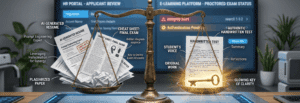
For educational institutions, assessment integrity is essential because it affects institutional reputation and demands a mix of traditional cheating detection and prevention, and new digital monitoring and validation techniques in online exams. In hiring, visible lapses in online assessment security create real business risks: low-quality hires, higher turnover. Data shows the scope of these challenges, and the payoff for getting it right.
Laszlo Bock, who helped revolutionize digital assessment strategies, understood the downstream impact. When integrity suffers, retention and performance all follow. The culture add approach saves more than money. It boosts organizational resilience. For example, organizations embracing authentic assessment methods cut unwanted attrition by one-quarter, leading to measurable hiring assessments ROI.
| Integrity Risk/Benefit | Impact in Education | Impact in HR |
|---|---|---|
| Generative AI misuse (cheating) | 88% student abuse rate | AI-generated resumes |
| Assessment transparency | Boosts student buy-in | Increases candidate trust |
| Lost trust from lapses | Reputation damage | 34% higher turnover |
| Employee assessment integrity | N/A | 25% lower attrition |
| Test security investment | Compliance met | Quality of hire improved |
For instance, frequent monitoring of remote assessment data not only flags academic dishonesty faster. It also directly reduces the number of on-the-job onboarding hurdles that lead to costly new hire churn.
Recognize Common Threats to Integrity in Online Assessments
You let small cracks go unchecked, suddenly your company’s reputation slides and top candidates lose trust. Reed Hastings wouldn’t risk that, and neither should you. The sniff test fades fast when threats slip through the cracks. Every HR leader must see each threat coming before it derails fairness in assessment or disrupts hiring integrity.
- Academic dishonesty: Cheating undermines honest results and skews hiring decisions.
- AI-generated answers: Candidates may use generative AI to bypass genuine effort.
- Test bank sharing: Common in digital assessment, this practice spreads answers quickly.
- Fake identities: Impersonation disrupts responsibility in testing systems.
- Candidate manipulation: Some game remote assessment platforms.
- Proctoring pitfalls: Overreliance can trigger privacy in assessment complaints.
- Data/privacy risks: Mishandling information erodes trust in online exams.
Build Secure and Fair Online Assessments: Core Principles
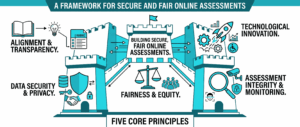
Imagine conducting remote assessments that run smoothly with no cheating surprises and every result tied directly to genuine measurable skills. Picture the confidence you’d feel reviewing candidate data on a high-resolution curved monitor while interviewers nod in a virtual panel. For HR, this is more than just a dream. It’s the outcome of combining strong assessment design and real clarity in process. Treading water with talent becomes a thing of the past when structure and transparency lead each assessment cycle.
1. Authentic Assessment Design
Assessments need to mirror real-world tasks or role-specific challenges. For instance, replace generic personality tests with scenario-based prompts. For example, a sales role may include a simulated pitch. In education, authentic assessment supports higher-order questions.
2. Clear Guidelines and Expectations
Clarity beats ambiguity every time. Reveal what’s expected before assessment day. This could be how remote assessment security is handled or citation requirements. For instance, a pre-employment integrity test should detail which behaviors are under review and the consequences of dishonesty. Transparency prevents test-day disputes and streamlines grading efficiency.
3. Prioritize Privacy and Accessibility
Build systems with privacy in assessment at the core. Don’t choose between accessibility in testing and robust security; demand both. For instance, always offer screen-reader compatible tests. These features reduce complaints and support compliance with equity in assessment requirements.
4. Foster Trust through Transparency
Honesty in assessments grows when participants see that scoring is fair. Use feedback loops, such as sharing rationales for scoring or providing formative feedback after remote proctoring. This approach increases student motivation and candidate buy-in. For instance, offer regular checkpoints to gather input and adapt future assignments.
Strategies for Academic Integrity in Digital Assessments
You’re running an online assessment. Students engage with the challenge not the short cut. Educators feel their integrity is honored respected for their role. Honest results flow in. This is supported by a culture where clear assessment guidelines and open communication are routine. Even without expensive virtual proctoring tools, instructors can curb cheating by using LMS features such as higher‑order thinking questions and varied question types.
1. Design Authentic, “Uncheatable” Exams
Craft assessments so answers require unique student insight, not easy lookups. For instance, in a creative assessment, require case analysis responses or scenario work. This makes dishonesty impractical. In HR, project-based hiring tasks yield similar fairness in assessment and demonstrate actual skill.
2. Incorporate Open Book, Conceptual Questions
Open book exams can foster student autonomy and raise learning quality. This is true if they demand synthesis, critical thinking, or originality verification. For example, mix low-stakes assessments with higher-order tasks so facts alone can’t ensure success.
3. Use Revision History and Collaborative Project Features
Digital transformation tools, like Google Docs revision history, support misconduct detection. Track edits and foster teamwork with group assessments or collaborative assignments. You could also mix test item security with reflection papers.
4. Set Milestones, Limit Test Windows, and Foster Wellbeing
Increase grading efficiency by breaking projects into assignment milestones. Use restricted test windows and feedback in assessment to keep energy high and cut temptations. Respect student wellbeing with clear realistic exam time limits and regular student support.
Cheating Resistant Assessment Design Checklist
- Unique, scenario-based tasks for each assessment
- Mix of question types, randomized ordering
- Use low-stakes assessments frequently to build ethical conduct
- Limited test window with delayed score release
- Track revision history, require group or project milestones
- Provide wellbeing resources and accessible support
Strategies for Integrity in Online Hiring Assessments
Data-driven, fair hiring isn’t just an aspiration. It’s the linchpin to a strong workforce and lasting brand trust. Every assessment decision echoes through reputation and retention. Dave Ulrich’s advocacy for tested standards proves how vital rigorous, transparent hiring assessments are. A scorecard hire beats a gamble every time for risk-averse HR teams and hiring managers.
1. Choose the Right Integrity Test Type
Start with proctoring alternatives and test types that match the job role. Overt tests gauge direct attitudes toward misconduct, personality tests probe deeper behavioral norms. An integrity test for remote positions could rotate scenarios using randomized questions and capture subtle cues that uncover honesty in assessments.
2. Use Detection, Defense, and Verification Tactics
Combine digital transformation in screening with practical follow-up. Implement test item security and watch for sudden spikes in candidate performance. Then, hold structured interviews or require video-based assignment submission to verify answers. For example, a behavioral event interview with customized question variety can decisively clear doubts and reinforce assessment compliance.
3. Leverage the Selection Matrix Below
You might prevent onboarding hurdles and drive down turnover by choosing tests that best fit role complexity, data sensitivity, and regulatory stakes. Frequent assessments and candidate verification link back to the proven 25% turnover reduction stat.
Organizations that systematically align honesty and integrity testing with role risk levels report significantly fewer workers’ compensation claims and avoidable disciplinary cases. Integrity Risk Assessment The Definitive Guide For Hr Leaders
| Test Type | Best For | Notes |
|---|---|---|
| Overt | Entry-level, customer | Simple, direct |
| Personality | Supervisors, trust roles | Uncovers deeper drives |
| Adaptive | Remote, high-value | Dynamic, harder to fake |
Leverage Technology: Tools, Proctoring Alternatives, and AI Mitigation
Research on academic integrity in online assessment highlights that preserving integrity requires combining methods like online proctoring and continuous authentication. At the same time, paid impersonation remains a common threat. Yet, using too much technology often erodes trust and triggers more online exam challenges than it solves. No technology should become a “rubber stamp” for decision-making.
Susan Heathfield has long advised leaders to balance technology in assessment with real conversation. For example, students need more than remote proctoring. Candidates expect privacy, not surveillance. It’s better to layer tools with human sense. You might use authenticity checks plus a transparent student conduct code to foster respect in online exams.
| Tool/Method | Pros | Cons | Implementation Tip |
|---|---|---|---|
| Proctoring Software | Deters some cheating | Privacy concern, high stress | Communicate scope/limits clearly |
| Originality Checker | Flags plagiarism | Can miss AI-generated content | Use as adjunct, not sole filter |
| Revision Tracker | Documents authorship | Time-consuming review | Set touchpoints, not 24/7 alerts |
| AI Detection | Finds AI-generated content | False positives possible | Manual review before any penalty |
Ensure Fairness, Accessibility, and Compliance in Online Assessments
When online assessments are genuinely fair and accessible, anxiety falls away, and engagement climbs. Candidates from every background participate with equal confidence. For HR, this means better student agency, sharper assessment fairness, and a true read on ethical conduct during high-stakes selection. Adam Grant shows how real progress starts with a trust-based, inclusive process.
Balance assessment security with relevant accommodations and privacy. For example, offer alternative formats for those who need them, verify compliance with industry requirements and keep test-taking environments smooth. You could require clear citation requirements in multimedia assignments while safeguarding private data for all participants.
Testing validity does not mean endless security hurdles. It means educating test-takers ahead of time, earning student buy-in and designing scaffolded assignments that support all candidates in demonstrating their best work. Reflection papers and cumulative portfolios can also support this goal, without bias or unnecessary barriers.
Deploying a structured integrity self‑assessment across teams can surface hidden conduct risks early and has been linked to measurable reductions in preventable turnover. Integrity Self Assessment Definition Benefits And Best Practices
See How IntegrityFirst Can Transform Your Hiring Results
Help your business boost the culture add, not just culture fit. IntegrityFirst Tests empowers organizations to reduce expensive onboarding hurdles and identify genuine high-integrity hires. Request a personalized assessment toolkit demo today and experience effective real-world results in open book exams and personalized assessment. Make every hire count.
Respond to Misconduct: Practical Frameworks for Detection & Action
It only takes one undetected cheat or skipped policy to send morale plummeting and create compliance headaches. Simon Sinek would say failing to spot misconduct means “Start With Why” never even gets off the ground. Suddenly, onboarding hurdles and costly mistakes can erode even a strong team’s foundation. If you stall on action, the pain runs deep. Lost credibility and missed deadlines drive out top performers.
- Detect: Regularly monitor assessment data and flag suspicious behavior in real-time.
- Document: Keep a full paper trail, recording all steps.
- Report: Notify supervisors with full context and supporting data.
- Escalate: Use formal systems for severe or recurring misconduct.
- Resolve: Apply transparent, consistent resolution steps. Retraining may be necessary.
Integrity Assessment Toolkit: Checklists & Templates
A mid-sized HR team once faced heavy assessment fatigue from repetitive checking and inconsistent reporting. By adopting a scorecard hire approach inspired by Who: The A Method for Hiring, they implemented clear checklists and misconduct templates. The results? Review time dropped by 40%. Team confidence in decisions doubled. Every hire and assessment felt measured and backed by a real paper trail.
| Resource | Description | Implementation Value |
|---|---|---|
| Academic Integrity Policy | Formal statement of integrity standards and procedures | Clarifies rules and expectations |
| Screening Checklist | Step-by-step vetting for candidates and test-takers | Ensures consistency and covers all bases |
| Misconduct Report Template | Rapid documentation for suspected misconduct in any assessment | Simple paper trail and escalation trigger |
| Candidate Declaration Form | Signed affirmation of honesty and compliance with guidelines | Promotes accountability |
| Assessment Review Workflow | Timeline for follow-up interviews and closure | Reduces review time; boosts follow-through |
Strengthen Integrity in Online Assessments: Next Steps for HR and Education Leaders
There’s a sense of pride in seeing integrity stick. Each hire and graduate stands for meaningful results. Giving up on assessment fatigue or letting process slip isn’t an option. Brené Brown encourages leaders to embrace real accountability. Don’t just tick the box on trust verify. Practical steps now create lasting change in every hiring round and exam session.
- Act on best practices: Prioritize authenticity and security in every step.
- Implement the full toolkit: Save time and raise accountability in workflows.
- Prioritize fairness: Guarantee equal access and trust for every test-taker.
- Pilot robust, research-backed assessments for measurable improvements.
- Consult with expert partners before tough evaluation cycles begin.
Download the comprehensive toolkit and connect with IntegrityFirst Tests today for tailored support that moves your assessment strategy ahead of the curve.