Schedule a call!
An integrity risk assessment for HR turns a vague worry about “honesty” into operational risk you can measure and manage: the chance that a hiring or staffing decision raises your exposure to theft, safety shortcuts, attendance fraud, or policy violations you already pay for. Treated that way, integrity stops being a values slogan and becomes a controllable line item, screened for at hire and monitored over time.
This guide is the hub for HR leaders building that capability. It defines what an integrity risk assessment is, explains why it pays off, and walks through how to identify and quantify risk, frame it strategically for the board, build a repeatable program, choose frameworks and tools, and keep the whole thing compliant. Each section links to a deeper guide so you can move from the overview into the specifics you need.
What Is an Integrity Risk Assessment in HR?

An integrity risk assessment in HR identifies, quantifies, and controls the workforce behaviors that create operational loss, then tracks whether the controls actually reduce incidents over time. It is not a single test. It is a process that maps integrity-related behaviors to outcomes you already track, such as workers’ compensation claims, shrink, and early-tenure turnover, and then governs selection and monitoring to move those numbers.
It differs from the screening tools HR already runs. A background check confirms factual history, such as employment dates and criminal records. A reference check captures third-party impressions. An integrity risk assessment instead estimates how a person is likely to behave under pressure, temptation, or competing priorities, and it does so consistently enough that you can compare candidates fairly and defend the decision later.
The predictive purpose is recognized at the federal level. The U.S. Office of Personnel Management describes integrity tests as valid predictors of job performance and of counterproductive behaviors such as absenteeism, illicit drug use, and theft, with a high return on investment where those behaviors are most disruptive. That is the mechanism a workforce integrity risk assessment is built to harness across the employee lifecycle, not just at the point of hire.
The Main Forms of Integrity Assessment
An integrity risk assessment is not a single product. The predictive signal can come from several formats, and the right one depends on the behavior you are trying to predict and the constraints of your hiring volume.
Overt tests ask directly about attitudes toward rule-breaking and past conduct, such as views on timecard honesty or safety shortcuts. Personality-based measures infer risk from broader traits tied to reliability and self-control, so their intent is less obvious and they tend to resist coaching. Biodata scores patterns in work history, such as repeated short tenures or attendance-related separations. Situational judgment tests place candidates in realistic dilemmas, like what they do when they are behind rate and no supervisor is watching. You are not limited to one format; many programs combine a primary instrument with a structured interview.
Why an Integrity Risk Assessment for HR Pays Off
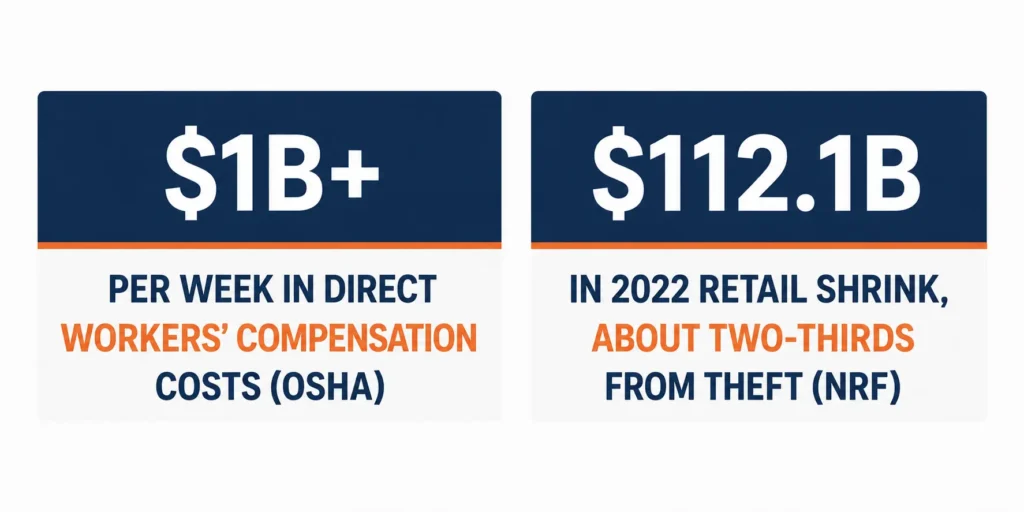
The losses are concrete and large, which is why integrity risk management for HR has moved from a niche retail-loss concern to a mainstream operational priority. Two numbers frame the stakes.
On the safety side, OSHA reports that employers paid more than $1 billion per week in direct workers’ compensation costs for disabling workplace injuries, much of it driven by preventable, rule-bending behavior in high-volume roles.
On the asset side, the National Retail Federation reported that shrink reached $112.1 billion in 2022, with internal and external theft accounting for nearly two-thirds of it. Theft is only one of several integrity-linked loss modes, but it shows the order of magnitude HR is working against.
What makes this strategic is that HR sits at the control points that shape the exposure: who enters the workforce, how quickly they move into risk-bearing roles, and whether standards are applied consistently across sites and shifts. An integrity risk assessment gives HR a defensible way to act on those control points and to report the results in the loss metrics leadership already watches.
These tools earn their keep through cost avoidance, not by finding top performers. Research consistently shows integrity measures predict counterproductive work behavior more strongly than they predict overall job performance, and because a small share of hires drives an outsized share of claim and incident cost, even a modest screening signal can produce real economic impact.
Where Integrity Risk Assessment Fits Across the Employee Lifecycle
A single discipline serves HR at three distinct points, and knowing which one you are in determines how the results should be used.
Pre-employment screening. Used before a hire, an integrity assessment helps identify candidates whose self-reported conduct and reasoning align with role requirements. It works best as one stage in a pipeline alongside structured interviews and reference checks, and it is the highest-stakes application because the output feeds a selection decision that must be applied consistently across every applicant.
Ongoing monitoring. Risk does not stay frozen at hire. A shift change, a new supervisor, or a high-pressure season can change what gets tolerated, so the strongest programs watch a small set of operational signals (timecard edits, scan exceptions, safety violations) and review them on a cadence that matches each role’s exposure.
Culture and governance. Aggregated integrity data benchmarks where risk concentrates across departments and surfaces weak controls before they become compliance problems. This is the diagnostic view that lets leadership target oversight and training where the exposure actually sits.
Identifying and Quantifying Workforce Integrity Risk
The first step is to name the risk in operational terms. Define the behaviors that create measurable loss by role, site, and process (buddy-punching, falsified scans, safety shortcuts, cash variance), size them by likelihood and impact, and decide which thresholds trigger escalation. This is the difference between “we screen for integrity” and a program a CFO or general counsel can recognize.
Quantifying risk also tells you where to spend. Not every role carries the same downside, so a cashier’s profile should weight cash handling and confrontation differently than a forklift operator’s, even when both sit under the same hourly umbrella.
The output of this step is a short, prioritized list of role-and-behavior scenarios, each tied to an outcome you can measure and a control you can apply. That list keeps the program focused on the handful of exposures that actually drive loss, rather than screening everyone for everything. Our guide to integrity risk assessment for HR leaders works through operational risk identification end to end, including a logistics case study where claims fell 32% and turnover fell 23%.
Integrity Risk as a Strategic, Board-Level Concern
Once risk is quantified, the CHRO can govern it like any other enterprise exposure rather than treating it as a compliance chore. That means tying integrity to the outcomes leadership already pays for, setting role-tiered controls, defining who can accept residual risk, and reporting movement in claims, shrink, and regrettable turnover on a fixed cadence.
Framed this way, integrity risk earns budget because it connects a control to dollars the business already loses. Our guide to integrity risk assessment as a strategic HR tool covers the board-level case in depth, including a finance-firm turnaround that cut turnover from 32% to 12% and claims by 50%.
Building an Integrity Risk Assessment Program
A tool does not create a program. You have a program when every site follows the same rules for what you assess, how you score it, and what gets documented. That means role-based risk definitions, a simple scoring matrix that produces consistent dispositions, mitigation rules with named owners, and reporting that proves control rather than activity.
The discipline is the same one you already use for safety: define the risk, put proportional controls in the workflow, and measure whether the loss actually drops. Our step-by-step guide to how to implement an integrity risk assessment program lays out the build, with a case study delivering a 50% turnover reduction and 42% fewer claims inside nine months.
Choosing Frameworks and Tools
The program needs a backbone. A recognized risk framework gives you the lifecycle and the documentation, and the federal Guide for Conducting Risk Assessments (NIST Special Publication 800-30) frames risk as a prepare, conduct, and maintain cycle that maps cleanly to how selection systems drift over time.
NIST sits alongside ISO 31000 (enterprise governance) and CIS (control hardening) as the main framework options, and the right choice depends on how your organization already makes risk decisions. The tool then supplies the predictive signal. For a side-by-side of those frameworks plus a structured vendor evaluation, see our guide to the integrity risk assessment framework and tools for HR.
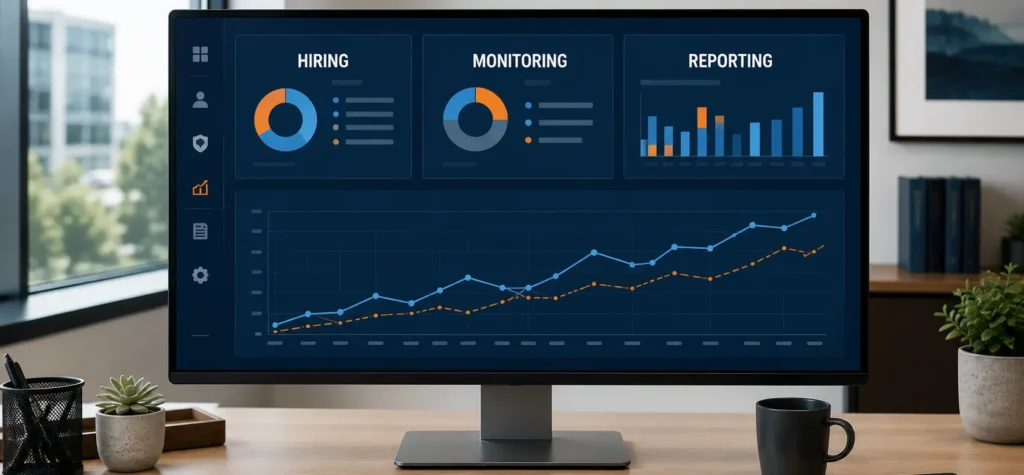
What an Integrity Risk Program Should Measure
A program only earns its place when it can show movement in numbers leadership already respects. Pair a small set of lagging outcomes with the leading signals you can influence week to week, then report them as control, then signal, then outcome.
On the lagging side, track workers’ compensation claim frequency and severity, recordable safety incidents, shrink and cash variance by site, and 30/60/90-day turnover and policy-violation terminations. On the leading side, watch the early indicators that predict those outcomes: near-miss reporting rates, repeat coaching on the same violation, timecard-edit and scan-exception concentration, override rates, and selection rates by group for adverse-impact monitoring.
The discipline is to connect a specific control change to a specific number. When you add an integrity screen for a safety-sensitive role, for example, you track selection rates and first-90-day safety violations, then tie those to claim rate by site over time. A high override rate is its own signal: it usually means the matrix has become advisory and the real decisions are happening off the record.
Compliance and Fair Use
Because an integrity assessment used for selection is a test under federal law, it carries obligations. Any selection instrument must be job-related and consistent with business necessity, validated for the role, and applied consistently, with selection rates monitored for adverse impact and a documented plan for what you do when a signal appears.
Written integrity assessments are also distinct from polygraph examinations, which the Employee Polygraph Protection Act restricts for most private employers. In day-to-day practice, the bigger exposure is not polygraph rules but the EEOC’s expectations for any employment test, so keep the two clearly separate and treat job-relatedness and adverse-impact monitoring as the primary obligation.
Common Pitfalls to Avoid
Most programs that stall fail for predictable reasons. The first is treating a score as a verdict instead of one signal: a single self-report number is a probability, not proof, so pair it with other evidence and keep a human in the loop. The second is inconsistent administration, where one site applies a different cutoff under hiring pressure, which undermines both fairness and defensibility.
The third is skipping role-specific validation and relying on a vendor’s general claim, when the burden to show job-relatedness sits with the employer. The fourth is promising that a tool will “eliminate” theft or injuries; the realistic and defensible promise is a measurable reduction in counterproductive behavior and bad-hire cost, concentrated in high-trust and high-volume roles.
Getting Started: A Practical Path
You do not need a year-long initiative to begin. Start where loss concentrates and measurement is clean: one or two high-risk role families in a handful of locations. Name the single outcome you most want to move (early-tenure turnover, recordable injuries, or shrink), and pull a baseline before you change anything, so you can prove the difference later.
Next, define the risk scenarios and the disposition rules for those roles, choose a validated instrument that maps to the behaviors you named, and place it in the hiring workflow with consistent triggers and documented overrides. Run it as a pilot for a set period, hold the process constant, and compare screened cohorts against the baseline.
If the numbers move, scale the same rules to adjacent roles and sites; if they do not, revise the scenarios or the cutoff before expanding. This evidence loop is also your compliance posture, because it documents that the assessment is doing the job-related work you claim it does. Treat the rollout as a controlled change, not a switch you flip everywhere at once.
Where Each Part Fits
The four guides in this cluster map to the four jobs of an integrity risk program: identifying and quantifying risk, framing it strategically, building the program, and choosing the framework and tools to run it. Start wherever your immediate decision sits, and use this page to keep the pieces connected.
For the wider picture of integrity assessment in hiring beyond risk management, see our complete guide to integrity assessments for HR.
Frequently Asked Questions
What is an integrity risk assessment for HR?
It is a structured process that identifies the workforce behaviors creating operational loss, quantifies them by role and likelihood, and governs selection and monitoring to reduce incidents. It produces comparable, defensible decisions rather than a one-off score.
Is an integrity risk assessment legal to use in US hiring?
Yes, when used correctly. The assessment must be job-related and consistent with business necessity, validated for the role, and applied consistently, with adverse-impact monitoring. Written integrity assessments are not restricted the way polygraph tests are.
How is this different from just buying an integrity test?
A test is one input. A program defines which roles and behaviors you assess, how scores translate into decisions, who owns exceptions, and how outcomes are documented and reviewed. Without that structure, a test produces inconsistent decisions you cannot defend.
What outcomes can an integrity risk assessment move?
Programs are built to reduce workers’ compensation claims, shrink and cash variance, safety incidents, and early-tenure turnover. The cluster guides include documented examples of double-digit reductions in claims and turnover.
Which framework should HR use?
It depends on how your organization makes risk decisions: NIST 800-30 for a repeatable assessment lifecycle, ISO 31000 for enterprise governance alignment, and CIS for hardening HRIS and ATS controls. The framework-and-tools guide compares them side by side.
Can candidates fake or coach an integrity assessment?
Some will try, especially if you signal the answers you want. You reduce gaming by using validated tools with built-in consistency checks, standardizing instructions, and treating the result as one structured input with documented action rules rather than a single make-or-break moment.
Why not just use interviews and reference checks instead?
Unstructured interviews drift across sites and supervisors, which makes them hard to defend and easy to bypass under hiring pressure. If you use interviews, make them structured, with the same questions and rubric, and use them to follow up on specific risk areas rather than to get a feel.
Where should an HR team start?
Start by naming the loss you want to reduce and the roles where it concentrates, then read the guide that matches your immediate need: risk identification, strategic framing, program implementation, or framework and tool selection.
Make Integrity Risk a Managed, Reportable Control
An integrity risk assessment gives HR a way to treat integrity as operational risk: identified by role, screened at hire, monitored over time, and reported in the metrics leadership already tracks. IntegrityFirst Tests provides validated integrity assessment tools built for United States HR teams that want to reduce claims, shrink, and turnover with a defensible, role-matched program.
Want to build the program for your operation? Contact IntegrityFirst Tests to schedule a demo, and we will help you map roles, choose a framework and tool, and set the reporting your leadership will act on.