Schedule a call!
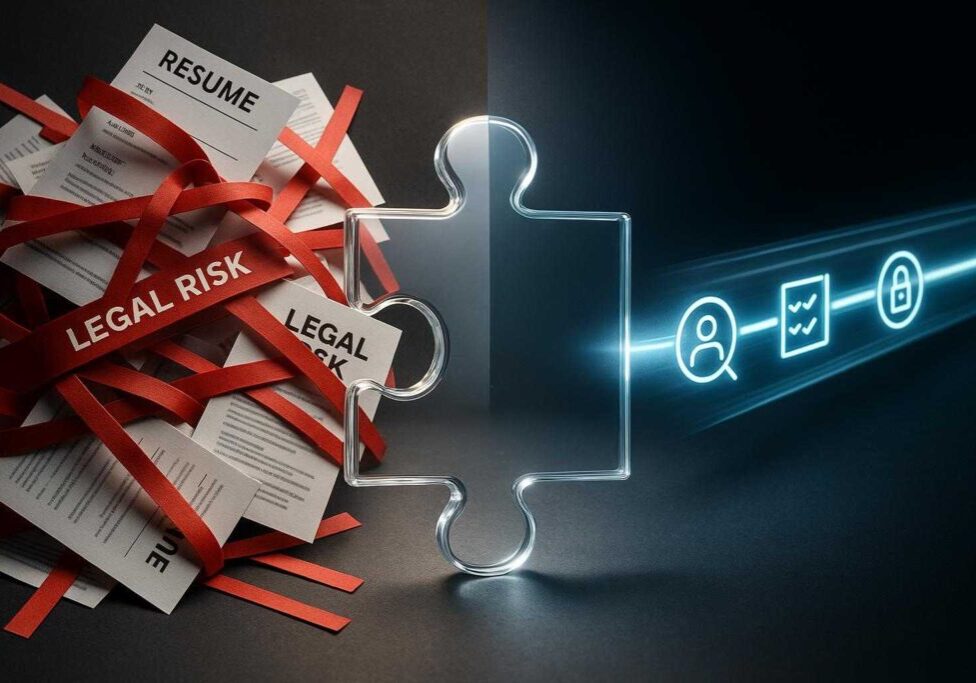
A single bad hire can feel like a gut punch that lingers for months. Headaches multiply with endless paperwork, team morale dips and costs pile up. The impact of ineffective screening isn’t just financial. It weighs on HR teams striving to maintain a high-performing workforce. There’s nothing like watching productivity slip while counterproductive behavior quietly erodes the foundation of workplace trust.
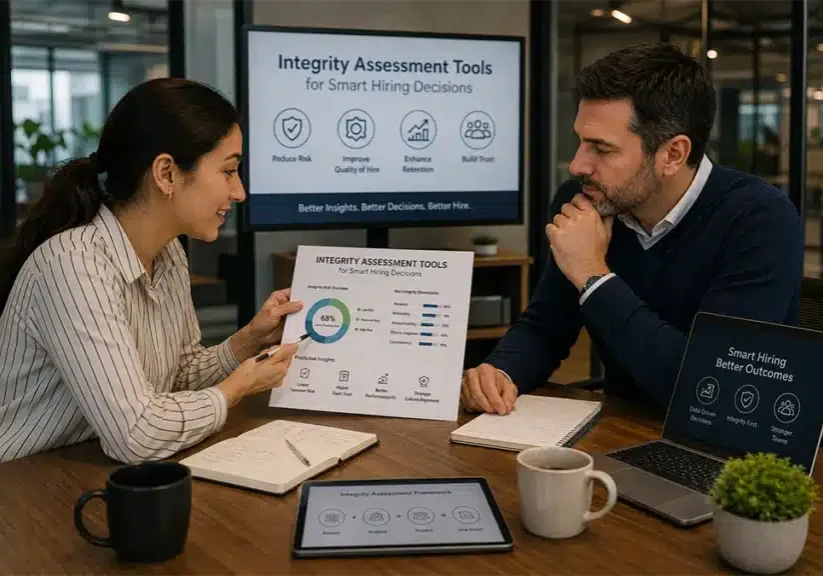
In such moments, the right screening tool is more than a checkbox. Using a proven honesty and integrity assessment brings focus and structure to pre-employment testing. You get actionable information so even high-risk job applicants don’t slip through the cracks. These assessments minimize the risk of workplace theft or absenteeism.
Validated pre-employment integrity testing can cut claim-prone hires so significantly that one client cut turnover by more than a third while also reducing preventable incidents. Read more in our article: Risky Hires Stop Hiring Your Next Work Comp Claim
As Laszlo Bock highlighted in Work Rules!, organizations succeed when hiring choices are driven by valid data. This guide reveals the practical steps top employers use, including face validity tactics, dependability assessment and candidate honesty safeguards, to upgrade hiring process improvement and protect your ROI in hiring.
What Is an Honesty and Integrity Assessment?
An honesty and integrity assessment is a structured employee integrity test that evaluates a candidate’s likelihood to act ethically, follow organizational rules, and avoid counterproductive work behaviors. These assessments are administered during job candidate screening to filter out high-risk applicants before making a hiring decision.
Unlike a standard personality test, honesty and integrity assessments focus directly on risk factor assessment for workplace theft and reliability. Questions might be overt, asking directly about past behaviors. Or they might be more subtle, embedded in personality-based test formats. Each format aims to provide measurable data on candidate trustworthiness and suitability for sensitive data roles. The assessments are particularly important in roles involving trade secrets.
HR professionals rely on these tools at various points in the selection process. Combining an overt integrity test with interviews and reference validation ensures a thorough screen-out measure. When utilized properly, these assessments enhance workforce quality while reducing cost of bad hires and employee turnover.
Organizations that deploy targeted integrity tests before frontline hiring have documented turnover reductions of up to 37% when they align assessment scores with clear retention goals. Read more in our article: Slash Turnover By 37 Revamp Your Workplace
Insights from Integrity Testing: Current Methods and Research guide their use.
1. Understand the Types of Honesty and Integrity Assessments

Not all honesty and integrity assessments measure the same qualities, and the best results come when you look under the hood. Choosing carefully is key to risk mitigation, especially for high-volume or sensitive hiring. Here’s how both major types work in practice, with strengths, limits, and smart use cases.
Overt (Clear-Purpose) Integrity Tests
Overt or clear-purpose assessments ask applicants directly about topics like theft and substance misuse. In the reliability assessment world, these questions are plain: “Have you ever taken something that didn’t belong to you?” Responses gauge the likelihood of problem behavior in the workplace. The advantage? Results are clear to interpret, cost-efficient and often show high screening efficiency. However, the approach’s transparency means some candidates may attempt to game their self-report assessment by giving socially desirable answers.
Personality-Based (Covert) Integrity Assessments
Personality-based (“covert”) assessments measure traits linked to job fit and emotional stability. These tests include items like, “How often do you complete tasks ahead of deadlines?” They excel at detecting risk factors and violence in the workplace. However, they require careful validity in hiring checks. They also suit large group assessment, multi-language assessment, and roles where overt questions may trigger candidate faking or legal considerations. Frank Schmidt’s research on incremental validity proves these tests add value, especially when integrated with cognitive ability test data and background checks.
2. See the Impact: Why Use Integrity Assessments in Hiring

A review of recent integrity test research in personnel and human resource psychology reports that integrity tests show meaningful predictive validity for counterproductive work behaviors and job performance, reinforcing their value as part of evidence-based selection systems. For HR leaders charged with risk mitigation, this is the north star.
When integrity assessments are calibrated to high‑risk roles, employers have achieved six‑figure annual savings by sharply reducing workers’ compensation and theft-related losses. Read more in our article: Roi Of Integrity Testing
Do the work up front, and you set a higher bar for workforce quality and productivity gains.
Key Business Outcomes: Honesty and Integrity Assessment ROI
| Impact Area | Data/Stat | Business Implication |
|---|---|---|
| Employee Theft | Up to 30% reduction | Lower theft risk, less loss |
| Employee Turnover | Up to 22% reduction post-implementation | Reduces attrition, keeps talent |
| Screening Market Size | $5.46B global (by 2026) | HR tech is scaling for demand |
| Hiring Cost Avoidance | $4,000–$6,000 per bad hire | ROI for every candidate prevented |
| Organizational Value | 95% rank integrity as top selection value | Universal HR priority |
After attending the SHRM Annual Conference, it’s clear that leading organizations emphasize integrity survey results when shaping their hiring strategy. Assessments aren’t a band-aid solution. They drive quantifiable reporting risk factors, diminish job performance prediction on every warehouse worker screening or bank teller assessment. The paper trail is real, measurable and tied to your bottom line.
3. Learn How Honesty and Integrity Assessments Work
Authoritative guidelines from the Society for Industrial and Organizational Psychology, adopted by the American Psychological Association in 2018, outline principles for the validation and use of personnel selection procedures, including technology-enabled testing and candidate communications. When your process aligns with these standards, your team is on the same page. Results roll in quickly, and compliance is a breeze.
Digital and on-site administration methods support busy teams, offering large group or individual deployment and assessment for global reach. Candidates access assessments via secure links, which makes it easy to handle both childcare provider assessment and distribution worker screening needs efficiently. Test duration varies, but most are under 30 minutes, minimizing process bottlenecks.
Scoring is automated through powerful algorithms that flag inconsistency detection and common red flags such as responses showing high hostility assessment. Anti-faking mechanisms like embedded honesty checks help separate authentic candidate perceptions from attempts to game the system. HR teams receive customized reporting instantly, with results synced right to workforce analytics dashboards. This ease of use means less time on paperwork and actionable targeted interview questions for final rounds.
4. Follow Best Practices for HR and Managers
Every step of the hiring process matters. The right structure reduces risk and hassle for HR teams. Following these best practices keeps candidates from getting lost in the shuffle. It also ensures your assessment process works, rather than backfires with customer complaints or legal headaches. Hunter Mabon’s research confirms that clear, fair protocols are a must for making integrity checks as effective as possible.
Best Practices for Integrity Assessments:
- Assessment validity: Use job-relevant, scientifically validated tools to minimize adverse impact. This supports evidence in case of test administration method reviews.
- Legal compliance: Stay current on EEOC rules and consider state laws. Document each step, which is critical for employment law compliance.
- Combine tools: Integrate integrity assessments with background checks and interviews. You can also add past behavior questions.
- Don’t rely solely on tests: Use hiring assessments to supplement due diligence. Interviews catch warning signs like frequent conflict with supervisors.
- Periodic validation: Evaluate test results regularly to control test administration cost and ensure hiring remains defensible.
- Choose vendors wisely: Go for providers that transparently disclose psychometric data and reporting methods. A clear paper trail streamlines audits and future reviews.
- Red flags: Don’t ignore inconsistent answers. These can indicate deeper anger/violence assessment issues.
Want hiring tools to reduce turnover and cut claims? IntegrityFirst Tests delivers simple, validated integrity assessments trusted by thousands of HR pros. Discover more.
Ready to choose the hiring solution that passes the sniff test? See how IntegrityFirst Tests streamlines your administration method and strengthens every hiring decision. Contact our expert team to get started now.
5. Guide Candidates Through the Integrity Assessment Process
A comprehensive meta-analysis of applicant reactions to selection methods across 17 countries found that honesty tests tend to be among the least preferred tools, highlighting the importance of clear explanations and framing to improve candidate perceptions. Imagine candidates stepping into your process knowing expectations and walking away impressed by transparency and support. This is a true culture add.
Set the stage by giving candidates a brief outline: how the assessment fits into the overall hiring journey and why consistency matters. Amy Cuddy’s work on workplace dynamics shows people thrive when they know what to expect.
If a candidate is put through the ringer and doesn’t pass, encourage them to request feedback. Transparency goes a long way. Suggest practical next steps, whether it’s another open role to consider. This level of openness sets your brand apart and earns trust in a competitive talent market.
6. Address Key Objections and Critiques
When candidates fail integrity assessments despite honesty or HR teams see top applicants slip away, frustration rises. No one wants a culture add lost over system limitations. Richard Feloni’s coverage on HR strategies spotlights these real doubts: the science and the risk of gaming.
It’s true: some argue about validity and fear skilled applicants could “see through the smoke” or “beat” an assessment. To mitigate these concerns, today’s best assessments use robust consistency checks and advanced red flag alerting. Ongoing validation efforts, such as benchmarking test fairness and adjusting scoring algorithms, support continual improvement. Candidate feedback can also provide valuable insight.
Emotional or economic stress can influence responses. However, context-aware review processes help. Encourage open communication when results seem out of step with candidate history. HR can use these insights as part of a balanced data-driven hire, rather than as a rubber-stamp excuse. In doing so, the paper trail is clearer. Every decision stands on firm ground.
7. Review a Real-World Case and Success Data

Picture a distribution company losing ground. Turnover nearly 28% and ongoing customer complaints making headlines. Leadership leaned into risk mitigation and implemented validated integrity testing aligned with the Uniform Guidelines on Employee Selection Procedures. Within one year, they halved employee turnover and saw customer complaints fall by 60%. The paper trail built by data-driven screening elevated management confidence and workforce morale.
EDITOR’S NOTE: FORMAT THE FOLLOWING AS AN INFOGRAPHIC
Integrity Assessment: Impact Snapshot
- Turnover: 28% → 13%
- Theft-related cost: $250K → $110K
- Customer complaints: -60%
- ROI: $500K+ cost savings in year one
After reviewing Tableau dashboards of the pilot location, leaders at this distribution worker screening site instantly saw the value in scaling integrity testing. Teams noticed stronger job fit and better adherence to operational standards. Fast, clear results. No guesswork.
Summarize Why Honesty and Integrity Assessments Matter
Imagine a hiring process where turnover drops and risk factors shrink. Managers feel confident about every new culture add. That’s the practical power behind the right honesty and integrity assessments for HR teams navigating tight deadlines and competing priorities. By relying on smart selection tools and due diligence, organizations prevent red flag hires and keep employee dynamics strong.
Streamlining screening means fewer “bad fits” in the pipeline. More time is dedicated to strategic HR initiatives. Whether flagged during background check services or surfacing through behavioral interview technique, the insights from proven integrity tests inform better decisions at every stage. ROI increases, hiring mistakes shrink, and team stability improves, all without the guesswork.
As talent competition intensifies, those who embrace risk mitigation early will win. For every HR leader ready to future-proof hiring and boost workforce quality, the next step is to explore validated, evidence-driven solutions designed for real results.