Schedule a call!
Few sensations compare to the tension HR pros feel when trust cracks within a team. That hollow in your chest, a restless sense that something vital has slipped away. When dishonesty seeps into hiring and workplace culture, it’s not just company values at risk. Accountability and morale all take a beating. For example, a single mis-hire can spiral, leading to skyrocketing employee turnover and plummeting engagement.
See how IntegrityFirst Tests helps HR leaders cut turnover and workers’ compensation costs with fast, validated integrity assessments.
Organizations that implement structured integrity testing alongside interviews often see double‑digit drops in workers’ compensation claims and related turnover costs within the first year. Read more in our article: Honesty Test Guide Improve Hiring Cut Turnover Reduce Risk
Patrick Lencioni’s research shows how one dishonest or unreliable team member can drag down organizational health. Every slip, cutting corners or omitting a reference check, chips at team dynamics until high performers start to disengage. The damage can be subtle but profound, echoing in recruitment process costs and workforce quality long after the initial mistake.
This guide provides actionable strategies for hiring managers and HR leaders to cultivate honesty and integrity through smarter employee assessment, transparency, and candidate evaluation techniques. It arms you with up-to-date data, proven assessment methods and the tools needed to raise the bar for ethical standards and lasting organizational trust.
What Are Honesty and Integrity in Employee Assessment?
Honesty and integrity in employee assessment are often blurred with similar qualities, but research makes an important distinction. In organizational research, integrity is often confused with related traits like honesty and conscientiousness; Becker (1998) argues for a clearer definition that distinguishes integrity from these concepts and links it to a coherent moral code. For HR leaders, that means it’s not just about asking if someone tells the truth. It’s about whether their actions align with a steady, well-defined set of ethical standards.
Honesty is a candidate’s commitment to truthfulness and accuracy in every aspect of their work, from resume accuracy to their candidate responses in interviews. Integrity goes further. It’s consistency in doing the right thing. That foundation supports reliability and accountability.
Simon Sinek regularly reminds leaders that integrity isn’t about catching people doing the wrong thing. It’s about building an environment where the right choices are table stakes for every employee. For example, robust pre-employment testing can reveal not just surface-level truthfulness but deeper layers of ethical decision-making.
Together, these concepts anchor the standards for candidate evaluation, promote transparent organizational values, and build a collaborative environment where trust can grow and thrive.
1. Link Integrity to Culture, Trust, and Retention

OECD data shows that even where formal integrity frameworks exist, weak implementation and monitoring can create a 17‑point gap between regulations on paper and practice. This gap undermines trust in institutions. HR leaders see this gap firsthand. 95% of organizations tout integrity as a core value, yet only 20% of employees report strong trust in leaders. Even worse, 52% say dishonesty is sometimes tolerated.
Brene Brown is known for her work on vulnerability and trust, and she often emphasizes how transparent leadership fosters true workforce trust. A culture where integrity is visible and errors are owned brings a ripple effect: employee assessment scores improve and absenteeism reduction follows. Turnover slows as well.
By making integrity more than an aspirational phrase and putting transparency into everyday leadership, hiring managers build credibility. Employees notice when leaders do more than “walk the talk.” Candidate reliability rises. The rewards are real. Engagement lifts and teams stabilize. Your employer brand becomes magnetic for top talent.
2. Use Data-Driven Integrity Testing Methods
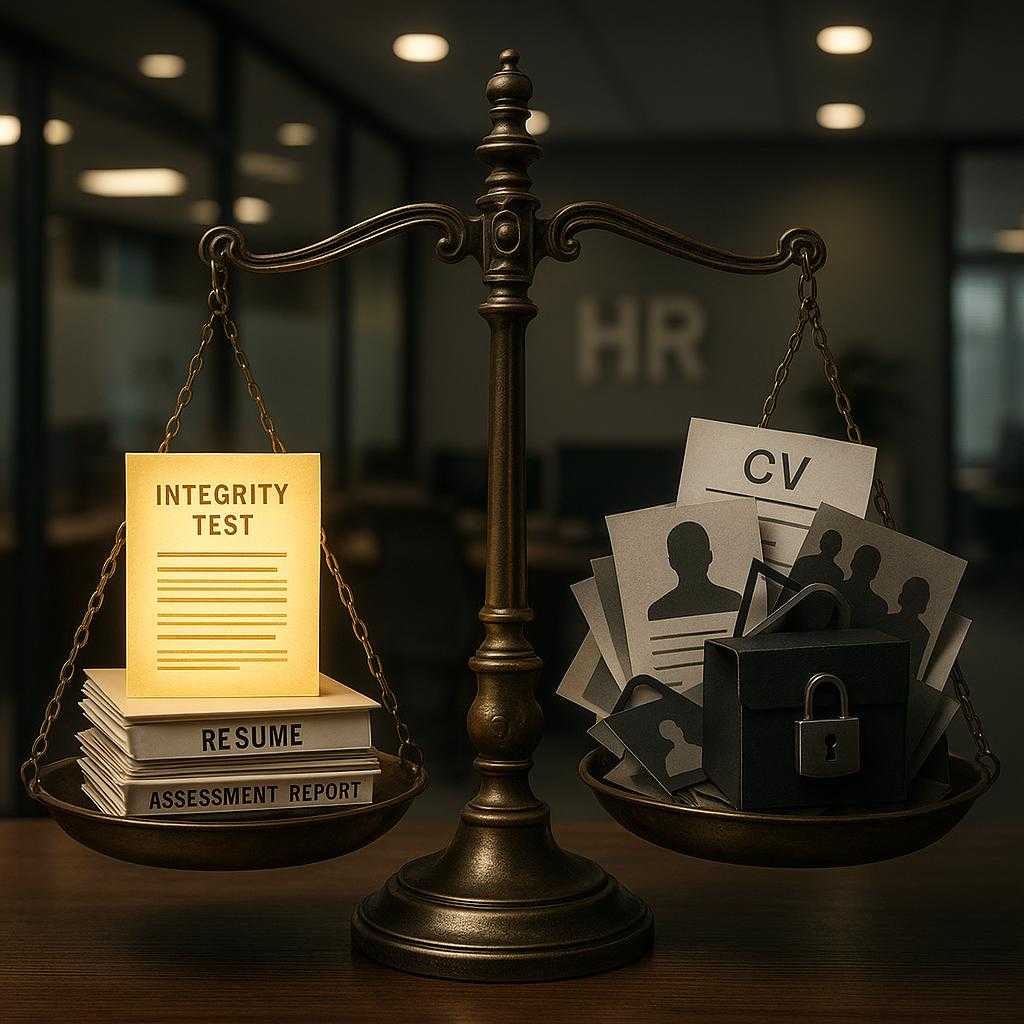
Many HR teams still hope for a silver bullet when it comes to screening for integrity but there is no one-size-fits-all test. The smartest approach is combining multiple data-driven assessment methods. Smart loafers aren’t just for style. They represent strategy: meaningful, practical choices for both hiring managers and candidates who demonstrate truthfulness and long-term value.
Below is a straightforward comparison of the most effective techniques for assessing candidate authenticity, reducing misconduct, and supporting ethical hiring decisions.
| Method | Measures | Best Use | Cost/Benefit | Risk Reduction |
|---|---|---|---|---|
| Integrity Tests | Attitudes and honesty | High-volume, early-stage | Low/High | Employee theft |
| propensity for | candidate screening | upfront/long-term | absenteeism | |
| misconduct | benefits | |||
| Personality Assessments | Reliability and | Leadership, team fit, | Moderate/Improved | Misconduct |
| self-control | role alignment | team dynamics | reduction | |
| emotional intelligence | ||||
| Situational Judgement | Ethical decisions | Finalists or sensitive jobs | Higher/Targeted | Legal/ethical |
| Tests (SJTs) | real-world moral | value | compliance | |
| scenarios |
For instance, integrity tests are ideal for fast, large-scale candidate screening, and personality assessments highlight openness and empathy for leadership roles. SJTs offer hiring managers a deep dive into candidate suitability for jobs with high ethical stakes. By layering these assessment methods, HR can minimize risks and support resilient workforce productivity.
Standardized integrity assessments can cut shrinkage and theft rates so significantly that some employers recover their entire testing investment within a single hiring cycle. Read more in our article: Integrity Assessments Definitive Guide For Smarter Hiring
3. Implement Behavioral and Situational Interviews
You walk into the interview room feeling ready. Business casual blazers on, candidate narrative in hand. Every question you’ve prepared helps reveal candidate trust, not just skills. When interview techniques dig deeper the best candidates rise to the surface, while those hiding behind rehearsed scripts can’t keep up.
1. Crafting Integrity-Driven Interview Questions
Effective interview techniques start with intentional design. Focus on crafting behavioral and situational questions about past challenges and responses to setbacks. For example, ask candidates to describe a time they faced a difficult decision and how they handled it. This exposes not only honesty but self-awareness and candidate motivation, which are crucial for job fit.
2. Sample Questions for Honesty and Ethics
Situational questions can open the door for honest discussion. Try: “Describe a time you admitted a mistake at work. What was the outcome?” or “Share a situation where you had to choose between what was easy and what was right.” For instance, these questions highlight emotional intelligence and candidate openness, giving hiring managers a clearer picture.
3. Evaluating Responses and Spotting Red Flags
Watch for candidate transparency and listen for evasive answers. For example, a red flag might be vague stories. Look for genuine self-reflection, not just polished stories. For hiring managers, using structured score sheets can make response comparisons more objective.
4. Reducing Bias and Standardizing Assessments
Consistency matters. Use prewritten questions and a clear rubric to standardize candidate evaluation and avoid bias. Conduct interviews with multiple evaluators for balance. For instance, you could have one person focus on non-verbal cues while another records responses for later review. This approach helps maintain fairness and strengthens workplace ethics and hiring outcomes.
4. Conduct Reference and Background Checks
No one wants their organization’s name tied to employee theft or a headline-worthy hiring mistake. Conducting reference and background checks is one of the most reliable ways to keep candidate selection on the up and up. These steps enable HR teams to validate candidate reputation, check for resume fraud, and ensure the candidate genuinely fits both job requirements and team dynamics.
Start by using proven background screening platforms. Automated solutions like GoodHire help you meet recruitment best practices with less manual risk. After running a background check, follow through with structured reference verification. For instance, ask past supervisors to describe how the candidate demonstrated workplace reliability.
Reference check forms are essential tools here. They lend consistency to your process while keeping you legally compliant. Let candidates know upfront that every offer is contingent on thorough due diligence. This is the gold standard for ethical hiring. Clear, transparent communication isn’t just a formality; it also encourages candidates to be open about previous roles. This strong foundation protects employee retention and workplace trust.
Well-designed integrity questionnaires can surface subtle red flags—such as justifying minor policy violations—that strongly predict future safety incidents and absenteeism. Read more in our article: Integrity Assessment Questionnaire
5. Address Gray Areas and Subjectivity in Integrity Assessment
It’s easy to second-guess an interview. Virtue ethicists note that traits like honesty are expressed through a person’s stable character and practical wisdom, not just isolated truthful acts, which helps explain why integrity judgments often feel nuanced and context‑dependent. You could be in the weeds, wondering if a candidate is the real deal or just knows how to put on a show. Addressing subjectivity in integrity tests and candidate honesty tests is more art than science, but can be tackled with a structured approach.
- Spot Inconsistencies: Look for frequent story changes or responses that feel “too perfect” to believe. Overacting often signals questionable candidate fit or gaps in the candidate background.
- Nonverbal Gut Checks: Pay attention to body language. These can reveal more about candidate potential than any resume bullet.
- Foster Candidness: Use strategies from psychological safety. Start interviews with small admissions of vulnerability to encourage candidates to be themselves, supporting honest candidate alignment.
- Avoid the Black Box: Don’t make judgments in isolation and involve multiple interviewers. Check the boxes with score sheets to add objectivity to personality assessment and candidate interview skills.
Request a Free Demo for Integrity-First Hiring
Transform your recruitment results. IntegrityFirst Tests offers robust pre-employment assessments to help you hire above board and strengthen job qualifications. Request a free demo today.
6. Integrate Integrity Assessment Into the Recruitment Process
You’re about to shape a recruitment process that not only attracts top talent but also reinforces company values. When integrity is treated as a core expectation, woven into every phase from job posting to feedback, your hiring signals become unmistakable. Candidates who fit the bill will recognize themselves in your culture and reputation.
Where to Assess and Align Values
- Job Ads: Highlight values-based language and expectations for honesty.
- Interviews: Use structured questions to dig into real examples of integrity.
- Onboarding: Lay out codes of conduct and revisit ethical expectations from day one.
Rubrics and Standards
- Structured Interview Rubrics: Apply the same standards to all candidates to reduce bias.
- Legal/Ethical Checklist: Confirm procedures are fair and EEOC compliant.
- Transparent Process: Maintain clear documentation and encourage open communication with every candidate.
Ongoing Measurement Post-Hire
- Pulse Surveys: Regularly measure workforce alignment and trust levels.
- 360 Reviews: Invite feedback from multiple perspectives.
- Walk the Talk: Reinforce company values beyond onboarding through recognition.
Build a Workforce of Trust and Reliability (Conclusion)

There’s a deep satisfaction in seeing teams thrive because every member is there for the right reasons. When honest hiring is embedded into your process, you see costs drop and employee retention rise. A workplace culture built on trust. Not lip service. Leaders and HR teams who do the right thing are the ones shaping resilient, high-performance organizations.
Key Takeaways:
- Define honesty and integrity specific to your company values and use those terms in every step of the hiring process.
- Make integrity a visible, consistent theme from job ads to final selection.
- Embrace data-driven assessment tools for early candidate screening.
- Standardize interviews and reference checks to eliminate bias.
- Foster a transparent, collaborative culture with ongoing 360 feedback post-hire.
Contact IntegrityFirst Tests to speak with an expert and design an integrity-focused hiring process that measurably reduces risk and turnover.
- Hold leadership accountable to walk the talk. Integrity isn’t just a policy; it’s the standard you model and reward.
Ready to hire with confidence? Partner with IntegrityFirst Tests for reliable, validated integrity assessment and see measurable impact in every hiring outcome you achieve.